Meet Your Maker: Tyler LuCarelli of Prismatic Distilling
As a child, Tyler LuCarelli would spend weekends with his parents exploring Southern California, Utah and Arizona, digging in the dirt and searching for rocks. His father, who has a minor in geology, introduced him to geodes and the art of cutting and polishing gemstones.
"I've always liked crystals," Tyler admits. "The problem with liking crystals is that you get confused for the people that surround themselves with crystals. I just think they're cool."
That childhood fascination with prismatic light reflecting through minerals would eventually inspire the name for his Rancho Cordova business, Prismatic Distilling. But first, he had to make his way from the vineyards of the Sierra Foothills to becoming one of the region's few craft distillers, all while maintaining his day job as head winemaker at a winery in Fair Play.
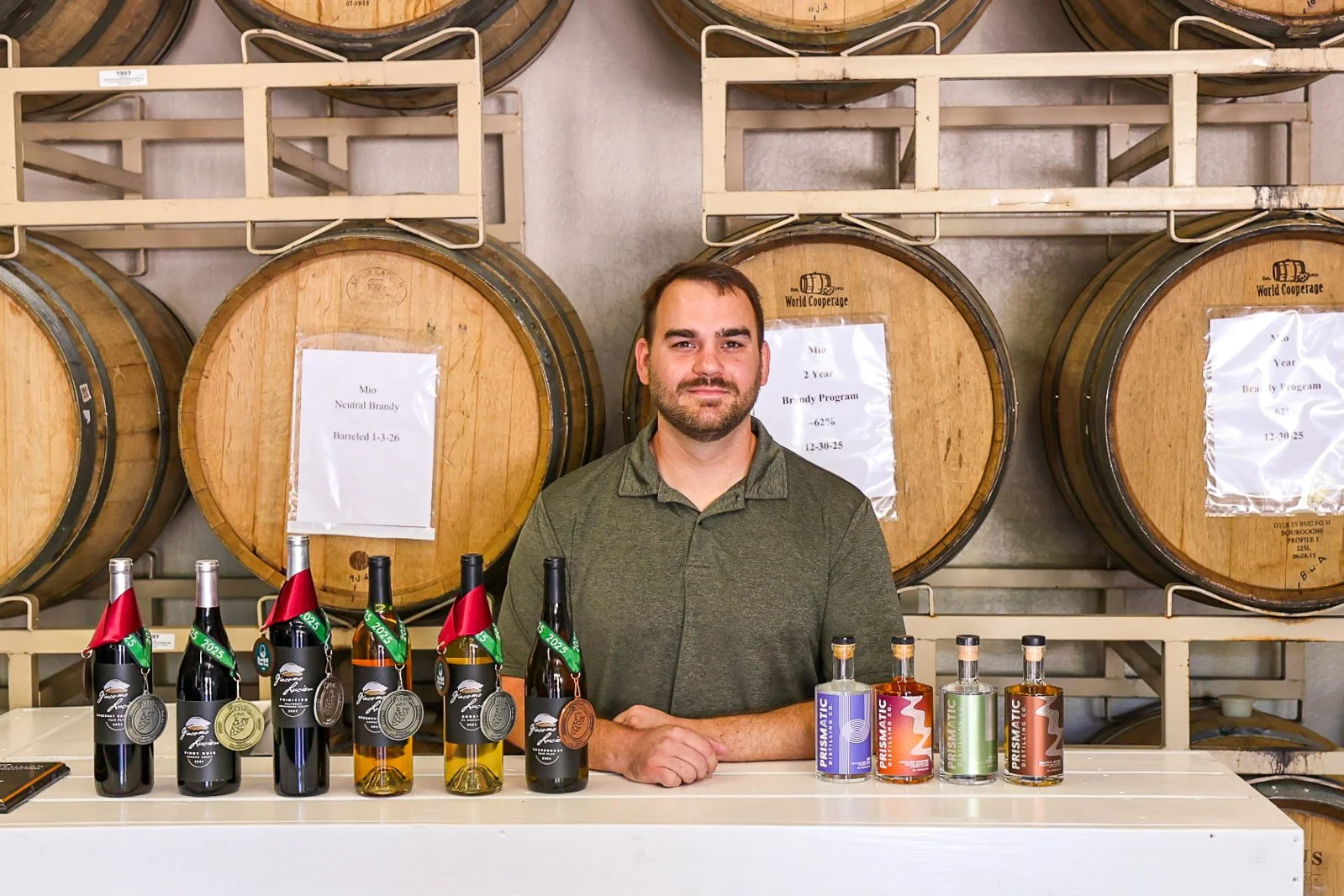
Tyler LuCarelli is the Owner and Distiller of Prismatic Distilling Company, a distillery located in the City of Rancho Cordova’s Barrel District.
A Winemaking Education
Tyler's path to distilling started in the vineyard. In 2017, at just 21 years old, he left the biochemistry field to work with a vineyard manager in the Sierra Foothills.
"The idea was that I would eventually take over the vineyard management business," Tyler explains. "I worked with him for about a year. I did harvest, pruning, spraying…pretty much every vineyard management operation you can do."
After a year of tractor work, Tyler came to a realization: "I'm not a ‘tractor guy.’ It's fun, but it's not what I want to do for the rest of my life.”
A winery owner he'd met through his work at the vineyard offered him a position as a cellar assistant, and Tyler jumped at the opportunity. He spent two years working in the cellar and tasting room at a local winery before being promoted to assistant winemaker. In 2021, when the winery sold to new owners, Tyler became head winemaker, a position he still holds today.
But as much as he loved winemaking, Tyler wanted creative freedom that an established winery with a loyal following couldn't provide. "The winery has been around since 1997 and has a very established style," he notes. "You can't deviate as much as you want. The customers expect a certain flavor."
The Natural Progression to Spirits
When Tyler started looking to launch his own venture, he knew he wanted to be in a more accessible location than the Foothills allowed. He also saw an opportunity: there weren't many distilleries in the region, and his winemaking background gave him unique advantages.
"With my background in winemaking, I know a lot of wineries that are looking to get rid of excess wine or excess grapes during harvest," Tyler explains. "It seemed like the natural progression as a winemaker, and it seemed like a good niche to fill."
In 2022, Tyler launched Prismatic Distilling, initially planning to focus on canned cocktails made from distilled surplus wine. But the business quickly evolved when winemaker friends started calling.
"They'd say, 'Hey, you have a distillery. Do you want to distill our stuff and give it back to us?'" Tyler recalls. "Wineries can use it for fortifying dessert wines, for cleaning. It's useful. So our business model just sort of shifted to custom distilling."
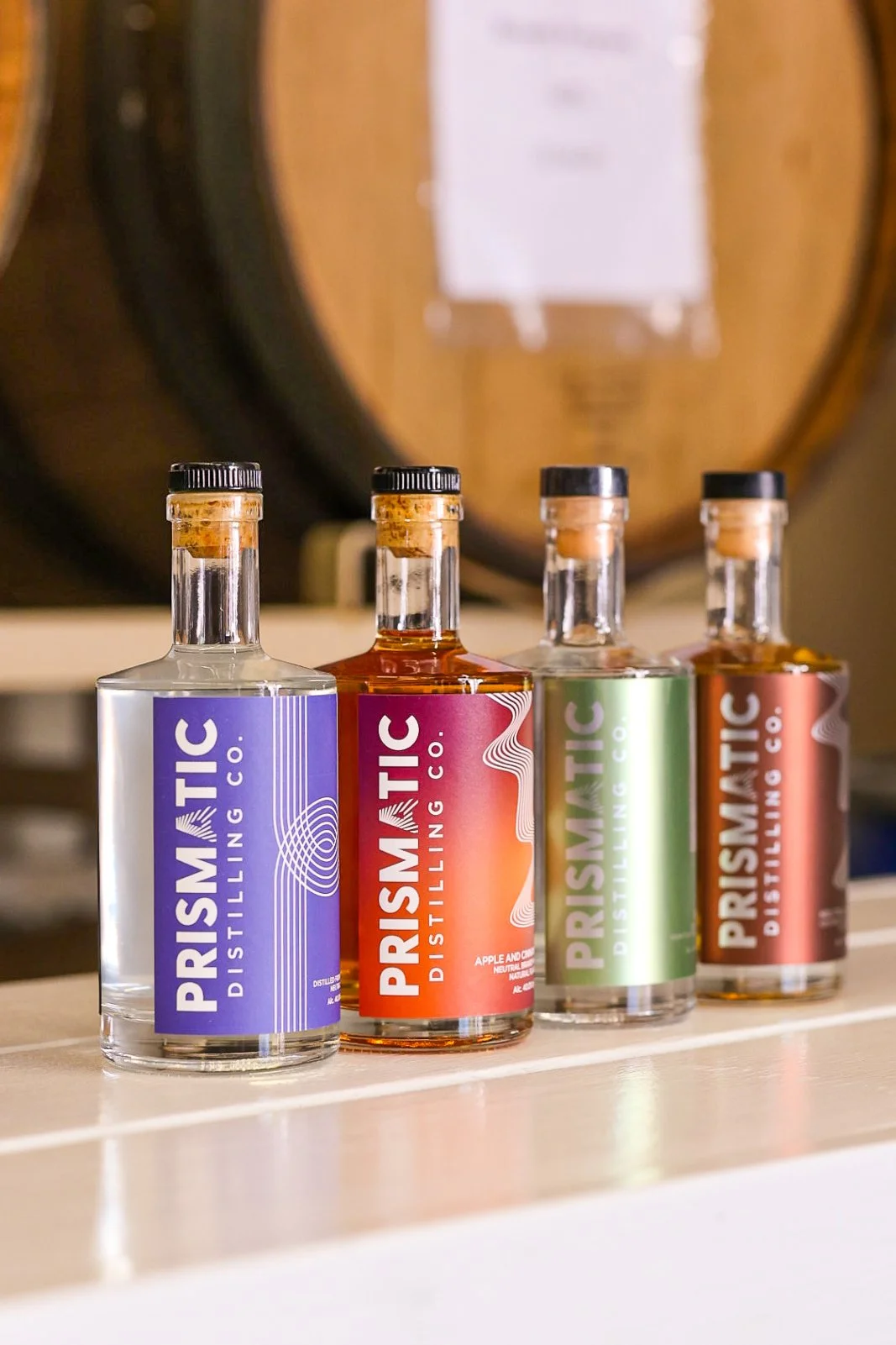
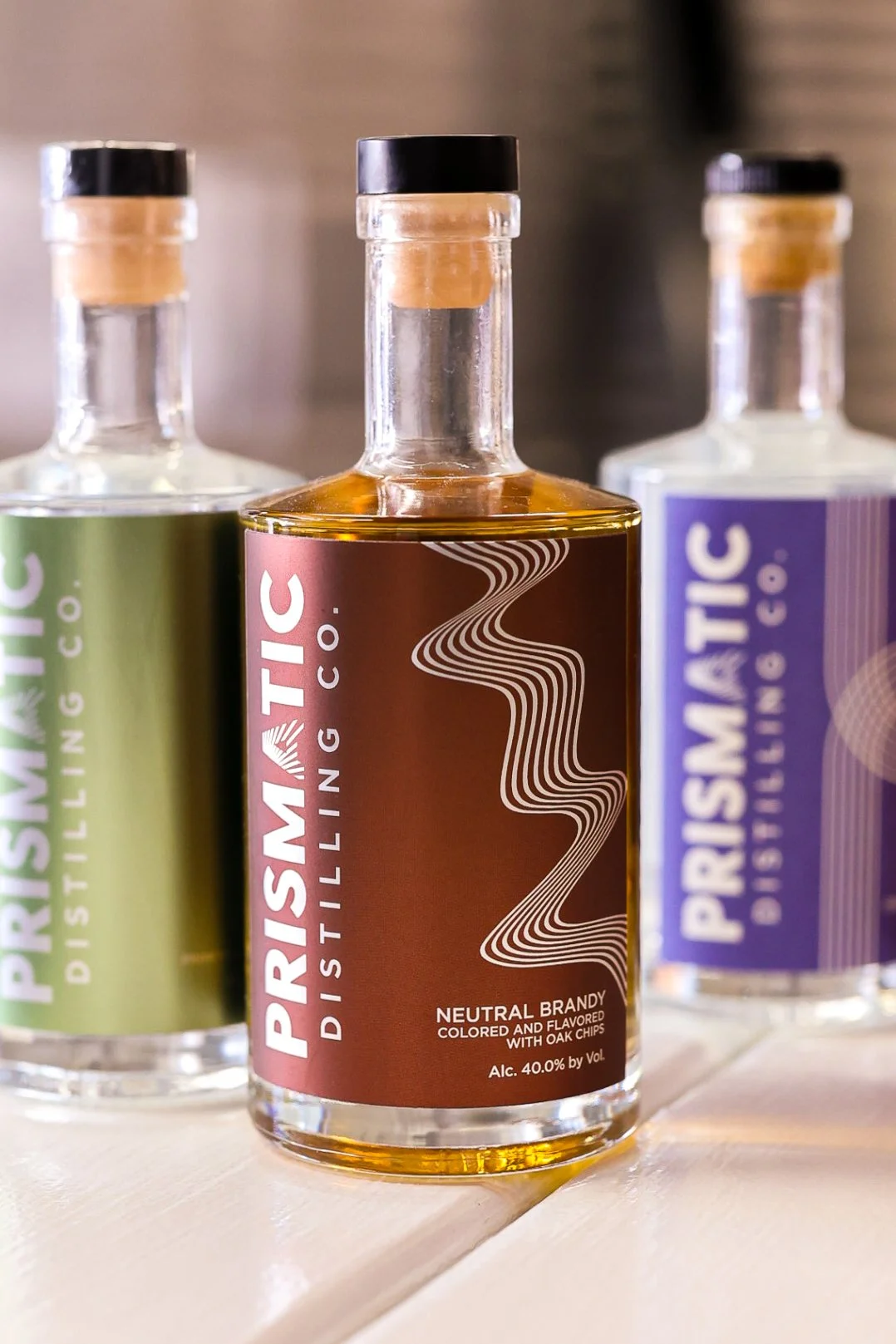
Today, custom distilling pays the bills, but Prismatic's own product line showcases Tyler's creativity. Everything is made from grapes: vodka, gin, brandy and grappa, an Italian spirit made from distilled grape skins. His first distilling run? The grape skins left over from making his 2024 Primitivo wine.
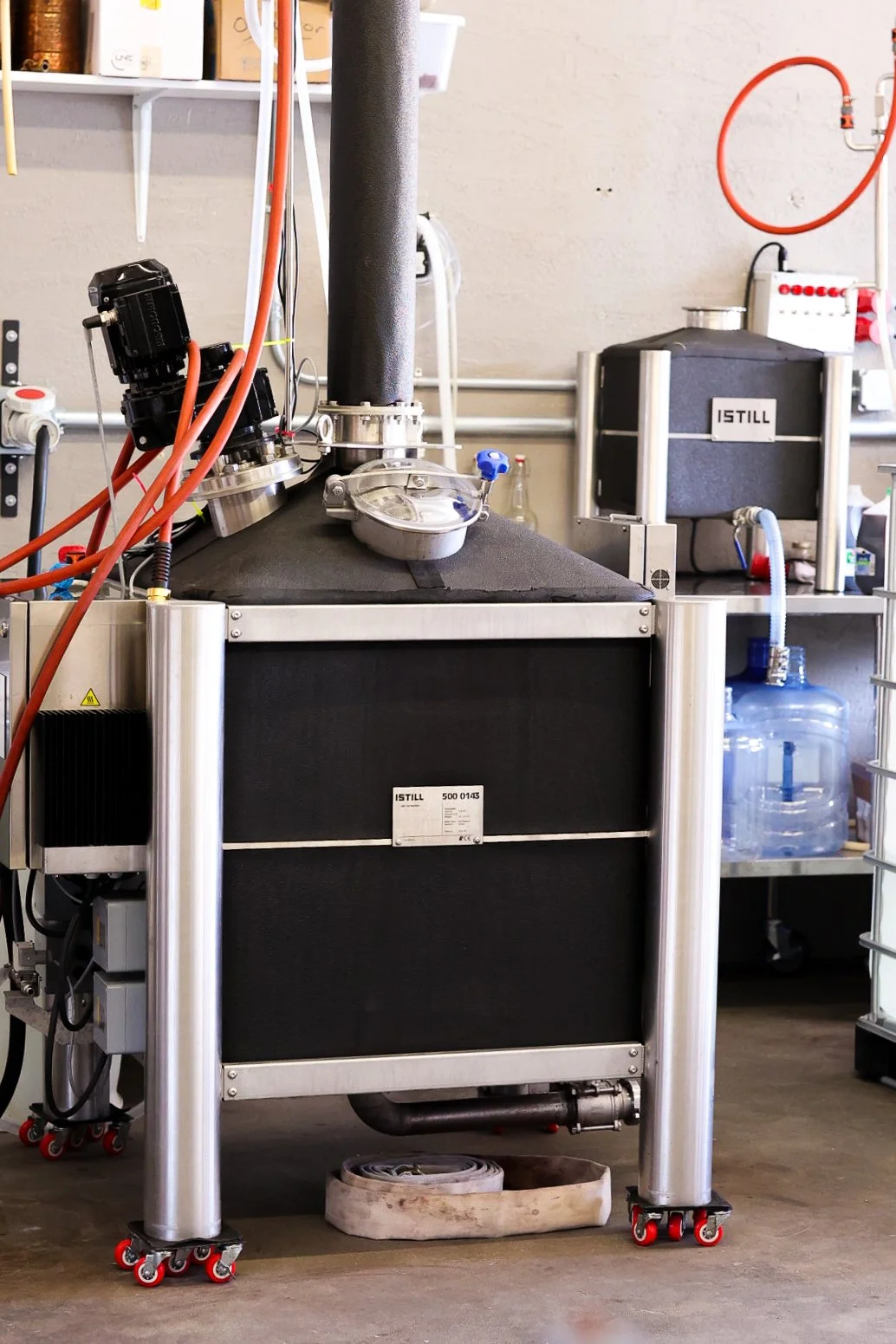
"We filled our 135-gallon still with grape skins and got out about eight gallons of usable alcohol," Tyler says. "If we fill it with wine, we get about 35 gallons. It's a lot of work for very little yield. But the Italians, being a resourceful group of people, figured out we can distill this and get what alcohol is left out of it."
Learning Through Trial and Error
The transition from winemaking to distilling required relearning skills Tyler thought he already knew. Fermentation works differently with cane sugar than with wine grapes. Barrels that would never work for wine make excellent brandy. And unlike wine, where a mistake means waiting a full year to try again, spirits offer immediate opportunities for adjustment.
"If you screw up a batch, you can throw it back in the still and try it again," Tyler notes. "That's been challenging, but it's also been a lot of fun."
The biggest challenge has been developing products for a market he wasn't deeply familiar with.
"I typically drink brandy at home, good French Armagnac or bourbon, but I'm not a cocktail person," he admits. "Vodka and gin, I never even really liked until we started making them."
Tyler's approach is to balance his own taste with customer preferences, a lesson his winemaking mentor taught him early on. "You have to like your product, but you do have to understand that you're not making it for you," he says. "It doesn't matter what I think if customers don't want to buy it."
Why Rancho Cordova
When Tyler and his wife started searching for a production space, they looked everywhere from Placerville to Midtown Sacramento. But most municipalities either weren't welcoming to distilleries or required years of permitting. Rancho Cordova was different.
"The city is very pro-business," Tyler emphasizes. "As a young business owner - I was 26, 27 years old when we started this - I don't have decades worth of savings to wait. Time has value to me. To be able to just come in here and do it was a huge advantage."
Two years into operations, Tyler is ready to expand. He's actively seeking a retail tasting room space in Rancho Cordova, ideally one that can house both Prismatic Distilling as well as his wine label, Giacomo Lucien Cellars, which he named after his grandfather.
"We've kind of hit that peak of what we can do on a custom level in this space," he explains.
The vision for the tasting room reflects Tyler's philosophy about making wine and spirits accessible rather than intimidating. "I want to make it about the experience without breaking the bank," he says. "You go places and they're charging $18 for a cocktail. We're the distillery. We make it. We don't have to charge that."
He's also committed to inclusivity, planning a robust menu of wines, spirits, beers and thoughtful non-alcoholic options. "My wife's best friend doesn't drink, and it's been eye-opening," Tyler notes. "You go out to dinner with somebody who doesn't drink, and it's like, here's your Italian soda. There's just not enough options."
Supporting Local at Every Level
Tyler's commitment to community extends to his sourcing. Nearly all the grapes for his wine come from small growers in Amador and El Dorado counties, people he's built relationships with through his work in the Sierra Foothills.
"There's not a lot of commercial vineyards up there," he explains. "Sourcing from the little guys helps them, and it helps us. We're the only ones that get the Chardonnay from the Chu Vineyard in Fair Play. We're the only ones that get the Primitivo from Two Oaks in Amador County."
This past harvest, he sourced old vine Carignane from a very small Amador County grower. It’s a very niche varietal and a vineyard that larger operations often overlook. "The big guys don't need our business. We don't want their fruit," Tyler says simply. "Keep it local. Keep it small. Keep it quality."
Even the spent grape skins from making grappa get returned to a vineyard for erosion control. "Nothing gets left to waste," he notes.
Looking Ahead
For now, Tyler balances two full-time jobs: head winemaker in Fair Play and owner-operator of Prismatic Distilling in Rancho Cordova. His parents, who both have restaurant and bar experience, have been instrumental in helping him navigate the production side while planning for a customer-facing space. His father-in-law, a chef in Sacramento, provides additional guidance.
"I'm good at this," Tyler says, gesturing to the barrels and still around him. "But when you get into actually running a customer-facing business, that's a whole other side of things. It's about knowing what you're good at and getting help with your weaknesses."
As he works toward opening a tasting room ideally in Rancho Cordova, Tyler is also experimenting with new products. He's exploring California agave spirits with a grower in Yolo County and has made small batches of rum. Eventually, he'd like to add traditional method sparkling wine and perhaps a whiskey program.
"Whiskey takes years," he notes. "You sit on it for five, six years. But we'll get there."
But patience isn't always necessary. Tyler's grappa, which takes intense labor for minimal yield, has already won over those who've tried it. His gins and vodkas, which are made from grapes instead of traditional grains, offer something distinctive in a crowded market. And his brandies, aged in both new oak and old wine barrels, showcase what happens when a winemaker applies that knowledge to spirits.
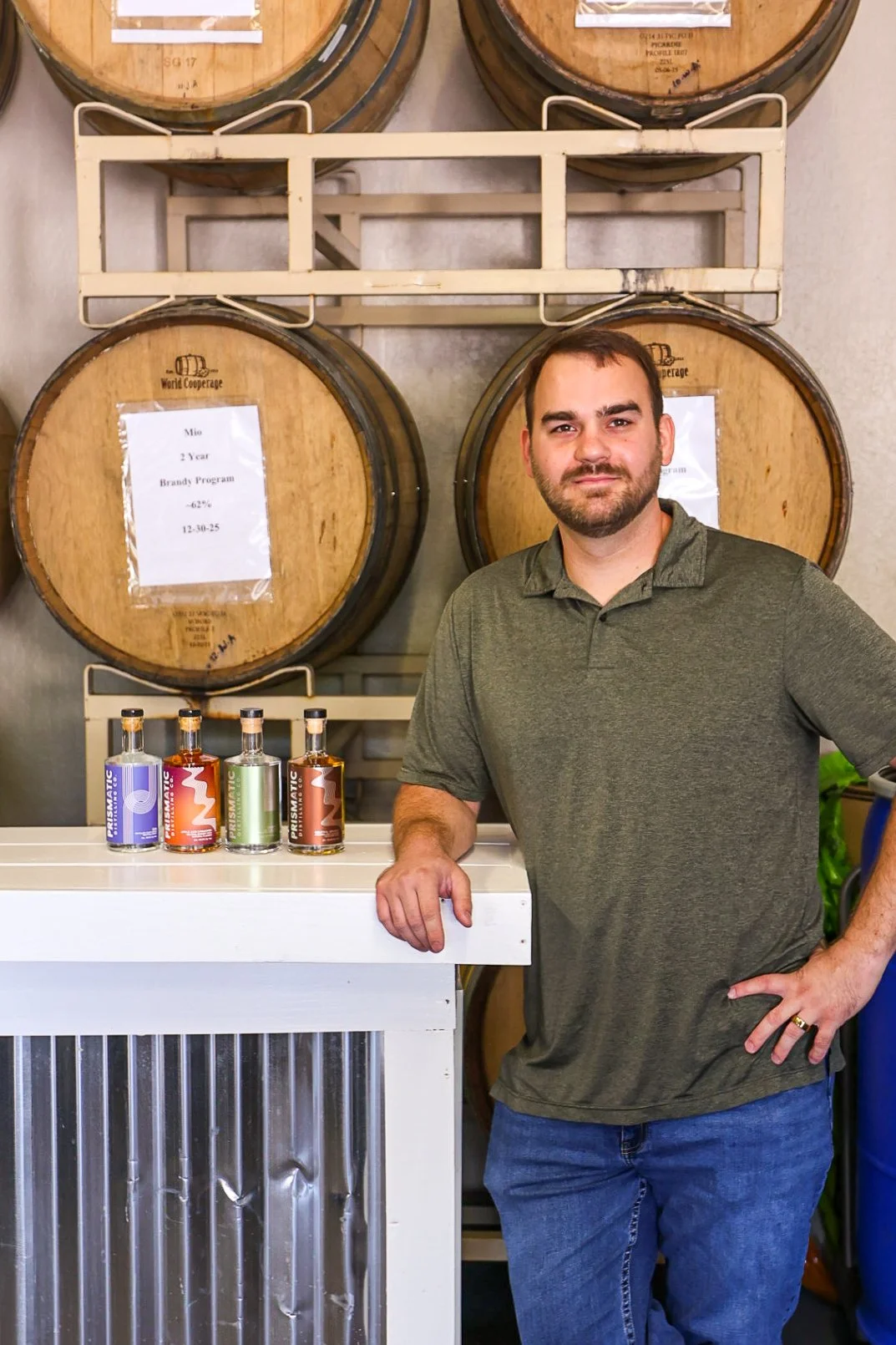
The iridescent labels currently gracing Prismatic's bottles are just prototypes. When Tyler opens his tasting room, he plans to use specialty paper that makes the white space shimmer with prismatic light: a small detail that honors that childhood fascination with shiny rocks and the way light transforms simple things into something beautiful.
Just like turning surplus grapes into distinctive spirits.
Prismatic Distilling Co. is located in Rancho Cordova's Barrel District. Visit barreldistrict.com to learn more about member businesses and upcoming events.